
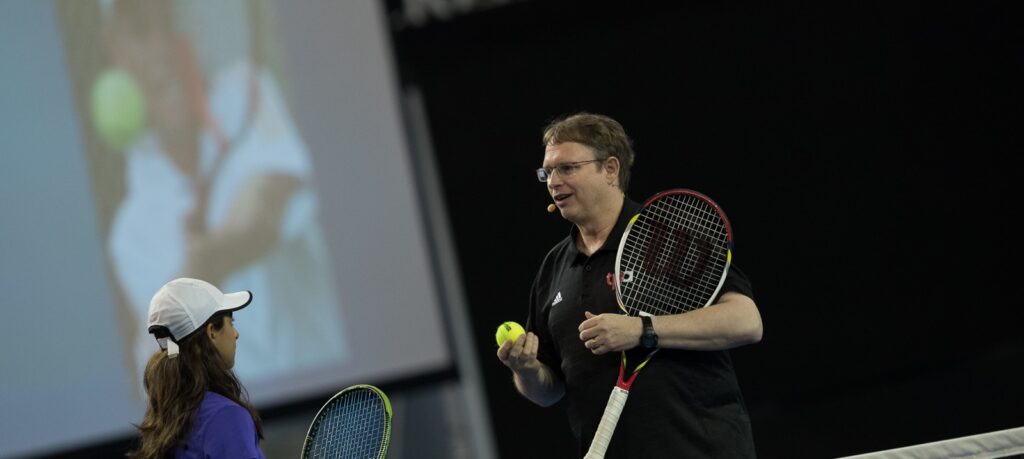
Tennis offers a challenging, often demanding environment that can foster growth. Coaching tennis is as much an art as it is a science. The dynamics between a coach and their players can be transformative, especially when players get off track during practice and become a hindrance to themselves and others.
THE POWER OF LANGUAGE IN COACHING
Words are more than mere sounds; they are tools that shape attitudes, direct behaviour, and influence the outcome of any group endeavour. In high-pressure environments such as competitive sports, a concise, impactful message can reach a player more effectively than lectures or punishments. Coaches often find that, when working with players who display negative attitudes, disrespect, or lack of motivation, a sharp, thoughtful power phrase can break through emotional barriers and prompt self-reflection.
Coaching Power Phrases need to be clear and relevant. They need to respect the player’s dignity while challenging and inspiring them.
POWER PHRASE EXAMPLES
Accountability/Responsibility: “Excuses don’t score points. What is your next move?”
Respect/Teamwork: “Is what you are doing helping the group or hurting it?”
Effort/Work Ethic: “Effort is a choice—what are you choosing today?”
Attitude/Mindset: “If you change nothing, nothing changes.”
HandlingAdversity & Failure: “The best lessons come from the hardest losses.”
Misbehaviour: “Do you need help making a better choice or can you make it yourself?”
PRACTICAL APPLICATION
While the right phrase can make a significant difference, context and delivery are equally important. The timing, tone and body language in the delivery all count. If players are receptive, the phrase can open the door to further meaningful dialogue.
CASE STUDY
The “Can you Handle it?” realization: An athlete is starting to adopt a ‘victim mentality’ and complain about less-than-ideal conditions (poor line calls by opponents, difficult challenges, etc.). The coach asks ‘Can you handle it?’ The player realizes they have overcome challenges before and can manage this one as well. The result is a player who begins to believe they can handle any adversity tennis throws at them (and maybe even transfers that to life in general).
CONCLUSION
Coaching player behaviour is a challenge that tests character and leadership. Yet, within every challenge lies an opportunity for growth—for both the player and the coach. By wielding the right words at the right time, coaches can turn conflict into connection, frustration into focus, and setbacks into comebacks.
Remember: a single sentence, spoken with conviction and care, can echo in a player’s mind long after the training is over.
Leave a Reply